Fast Charging vs Slow Charging: Optimizing Lithium Battery Lifespan & Performance
For lithium battery users across consumer electronics, electric vehicles, and industrial equipment, the choice between fast and slow charging boils down to a fundamental tradeoff: immediate convenience versus long-term battery health. Slow charging remains the gold standard for maximizing battery cycle life, while fast charging delivers unmatched speed for time-sensitive operations. The optimal approach balances both methods to meet operational needs while preserving battery integrity.
Core Tradeoff: Speed vs Long-Term Battery Health
The key difference lies in how each method affects internal battery chemistry and thermal conditions. Slow charging minimizes heat buildup and chemical stress, allowing lithium ions to move smoothly between electrodes without causing structural damage. Fast charging, by contrast, uses high current to accelerate ion transfer, which generates significant heat and increases internal wear, though modern battery management systems (BMS) have mitigated many of these risks.
Understanding the Two Charging Methodologies
Fast charging utilizes high-power direct current (DC) ranging from 20kW to 120kW, enabling full charges in 15 minutes to 1 hour. It is indispensable for applications requiring minimal downtime, including electric vehicle fleets, industrial robotics, and emergency backup systems. However, its high current output necessitates advanced thermal management systems to prevent overheating and battery degradation.
Slow charging relies on low-power alternating current (AC) typically under 2kW, delivering gradual energy replenishment over 6+ hours. It is the standard for medical devices, consumer electronics, and residential energy storage systems, where charging speed is less critical than long-term reliability. This gentle charging method reduces internal stress and preserves battery capacity retention over thousands of cycles.
How Each Charging Method Impacts Battery Degradation
Fast charging accelerates battery wear through two primary mechanisms: thermal stress and chemical degradation. The high current generates excess heat that can exceed safe operating temperatures, breaking down electrolyte and damaging electrode structures. Rapid ion movement also causes uneven lithium plating on the anode, reducing available capacity and shortening cycle life over time.
Slow charging, by contrast, allows stable, uniform ion transfer between electrodes, minimizing heat generation and chemical stress. Batteries charged slowly consistently retain over 80% of their original capacity after extended use, maintaining high state of health (SOH) for significantly longer periods. The only limitation is its time-intensive nature, making it unsuitable for high-demand, time-sensitive applications.
Balanced Hybrid Charging Strategy for Optimal Results
The most effective approach is a hybrid strategy that combines the strengths of both methods: use fast charging exclusively for urgent energy needs, and rely on slow charging for daily, routine replenishment. Additionally, maintaining battery state of charge between 20% and 80% at all times further reduces degradation, as extreme high or low charge levels cause additional stress on battery chemistry.
Final Takeaway
Slow charging is unequivocally better for maximizing lithium battery lifespan, while fast charging is essential for convenience and operational efficiency in time-sensitive scenarios. By adopting a balanced hybrid approach and following best practices like avoiding extreme charge levels, users can achieve optimal battery performance and long-term reliability, extending service life and reducing replacement costs.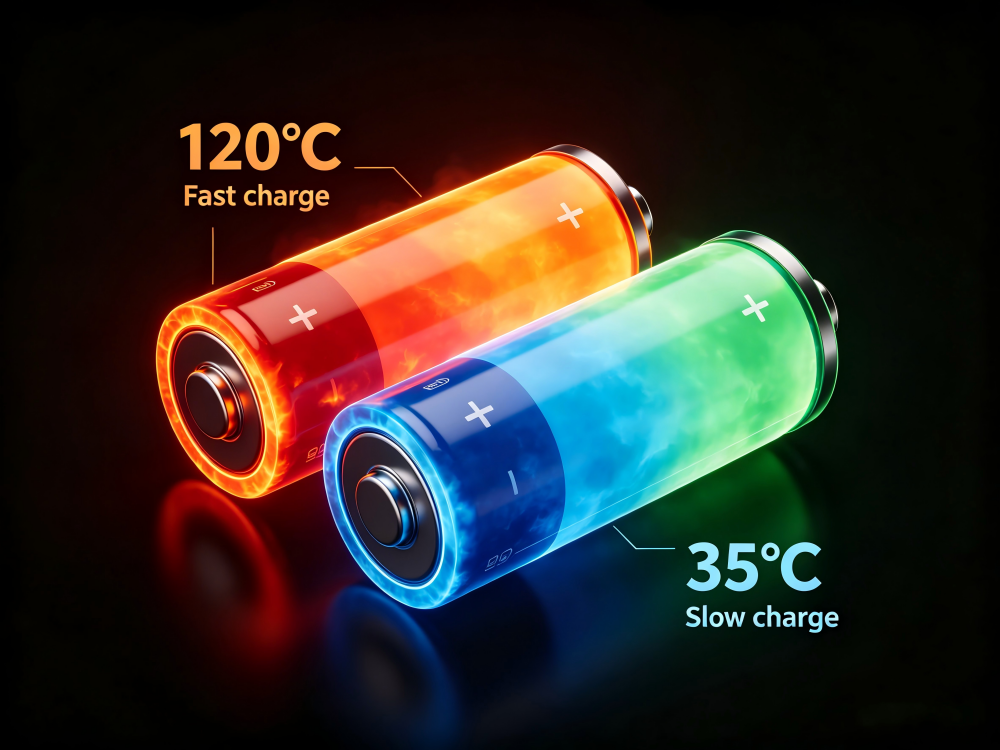
Frequently Asked Questions
Q: Does fast charging permanently damage batteries?
A: Occasional fast charging with proper thermal management causes minimal damage, but frequent use without adequate cooling accelerates degradation and shortens lifespan.
Q: What is the single most effective way to extend battery life?
A: Keeping battery charge levels between 20% and 80%, combined with prioritizing slow charging for daily use, delivers the greatest longevity benefits.
Q: Is slow charging always the better choice?
A: For battery health, yes. However, fast charging remains necessary for applications where minimal downtime is a critical operational requirement.
Welcome to contact us:
Inquiry more product details from the : Lithium Ion Battery Manufacturers
WhatsApp/Wechat/Mobile: +86 13332949210
Email: info@xihobattery.com
Website: www.xihobattery.com