By XH-Alan | 16 March 2026 | 134 Views
Breaking the Cold Barrier: BYD, CATL and Gotion Redefine EV Battery Performance in Extreme Sub-Zero
For years, extreme cold has been the most intractable barrier to global electric vehicle (EV) adoption, crippling charging speeds, slashing driving range, and undermining operational reliability. In 2026, China’s lithium-ion battery leaders — BYD, CATL, and Gotion High-tech — have unveiled a suite of low-temperature battery solutions spanning material chemistry, vehicle integration, and charging infrastructure, igniting a high-stakes race to dominate the next phase of electrification by conquering frigid operating limits.
Industry analysts now widely agree that cold-weather resilience has evolved from a niche feature to a non-negotiable industry benchmark, with the unwritten rule “no low-temperature performance, no viable battery” shaping R&D roadmaps across passenger and commercial vehicle segments. From cold-tolerant charging and discharging to consistent range retention and reliable cold starts, every EV category is now part of an all-out, multi-scenario battle to defeat the limitations of sub-zero temperatures.
Extreme Cold Validation: The New Industry Benchmark for Battery Performance
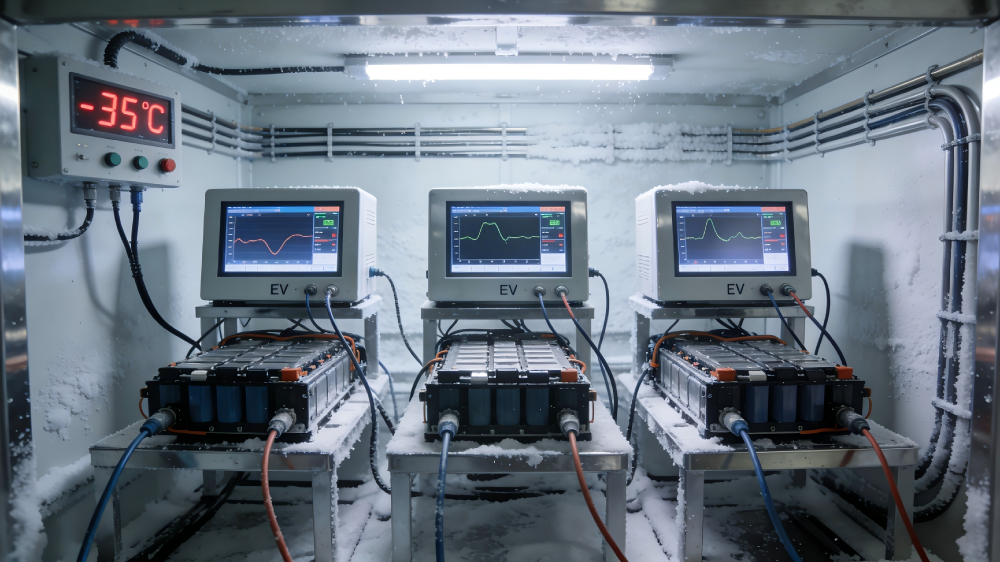
To define modern cold-weather capability, battery makers and automakers have turned to the harshest testing grounds: northeast China and Inner Mongolia, where winter temperatures regularly plummet to -30°C to -40°C, on par with Antarctic coastal conditions. These frigid regions have become the ultimate proving ground for next-gen battery tech, with players racing to prove their products can break the historic geographic barrier limiting EV adoption in cold northern markets.
Against a rigorous -30°C performance benchmark, the three leaders have delivered landmark breakthroughs. BYD’s second-generation Blade Battery has achieved a 12-minute extreme cold flash charge, a game-changer for winter usability. CATL’s Tianxing Low-Temperature Edition sodium-ion battery for light commercial vehicles enables plug-and-charge at -30°C with zero pre-heating required. Gotion High-tech’s G-Battery, paired with Changan’s Qiyuan A06 sedan, withstood 24 hours of -40°C outdoor storage while retaining stable 6C ultra-fast charging capability.
Divergent Technology Roadmaps: Tailored Strategies for Cold-Weather Dominance
While all three players target the same cold-weather pain points, their strategic roadmaps diverge sharply. CATL has bet heavily on sodium-ion chemistry to capture both passenger and commercial vehicle segments, while building a multi-dimensional ecosystem integrating ultra-fast charging and battery swapping. BYD, by contrast, has focused on unlocking the low-temperature charging potential of lithium iron phosphate (LFP) chemistry, linking upstream megawatt flash charging infrastructure with its full vehicle lineup — including the Denza and Tang series — to build a seamless cold-weather value chain.
If BYD’s first-generation Blade Battery redefined public perception of LFP’s safety credentials, its second-generation iteration fixes the chemistry’s historic low-temperature weakness, while redefining LFP’s value proposition in frigid operating conditions.
The Ecosystem Arms Race: Infrastructure & High-Voltage Platforms
Historically, battery swapping’s biggest selling point was its ability to deliver a full charge in minutes, far outpacing even the fastest plug-in charging. Today, 2026’s fast-charging narrative still centers on “full range in the time it takes to drink a cup of coffee”, roughly 15 minutes of charging time.
BYD’s second-gen Blade Battery, paired with its megawatt flash charging system, delivers a sub-10-minute flash charge at room temperature, and can charge from 20% to 97% in just 12 minutes even at -30°C. The large-scale rollout of flash charging piles, particularly in northern cold-weather markets, is the critical lever to make BYD’s flash-charge EVs accessible to mainstream consumers.
Unlocking northern EV adoption is inseparable from rapid charging infrastructure expansion. Cold northern regions are not just a major incremental market for new energy vehicles, but also for charging and swapping stations — the core battleground for the next phase of electrification.
From an OEM perspective, BYD’s flash charging moat is rooted in its vertical integration of battery and vehicle design. While BYD’s flash charging piles may eventually open to other brands, the extreme charging power requires batteries matched to higher-voltage platforms. 800V has become the baseline for fast-charging competition: 800V high-voltage platform vehicle penetration exceeded 10% in 2025, with sales nearing 1.5 million units, and is forecast to hit 15% in 2026.
For battery suppliers, 5C cells have become the mainstream for 800V platforms, featured in models like the Xpeng G9 Max, Nio ET9, Li Mega, Zeekr 007/009, and Xiaomi SU7 Ultra, with supply dominated by CATL, CALB, Eve Energy, and Gotion High-tech.
Low-temperature capability is emerging as a key new value add for 800V models. The Changan Qiyuan A06, equipped with Gotion’s G-Battery, completed 24 hours of frozen outdoor storage, then used its 800V SiC high-voltage platform to add 200km of range in just 6 minutes via 6C ultra-fast charging. BYD’s flash charging system, by contrast, is designed to pair with a 1000V high-voltage platform to fully unlock its charging advantages.
Beyond voltage, price is the next critical battleground. Previously, over 80% of 800V high-voltage models were priced above 200,000 RMB, targeting the mid-to-premium segment. Thanks to pushes from BYD, Arcfox, and Leapmotor, 800V technology has now been democratized to the 150,000–200,000 RMB price bracket. BYD is now pushing 1000V platform models into the 200,000 RMB and even 150,000 RMB categories, launching flash-edition models under its Fangchengbao brand starting at 153,800 RMB just days after announcing its flash charging strategy.
CATL’s cold-weather ecosystem, meanwhile, links material chemistry, passenger and commercial vehicle applications, and ultra-fast charging/battery swapping into a single integrated system. Its Naxin sodium-ion battery is already in mass production across multiple Changan brands, including Avatr, Shenlan, Qiyuan, and Graviera. The company also plans to complete over 3,000 Choco battery swap stations nationwide in 2026, covering 140+ cities, with over 600 stations in cold regions including Beijing-Tianjin-Hebei, northeast China, Inner Mongolia, and Shanxi. Its swap matrix includes both sodium-ion passenger vehicle models and light commercial swap vehicles.
Material Science Breakthroughs: Rewriting Low-Temperature Chemistry Rules
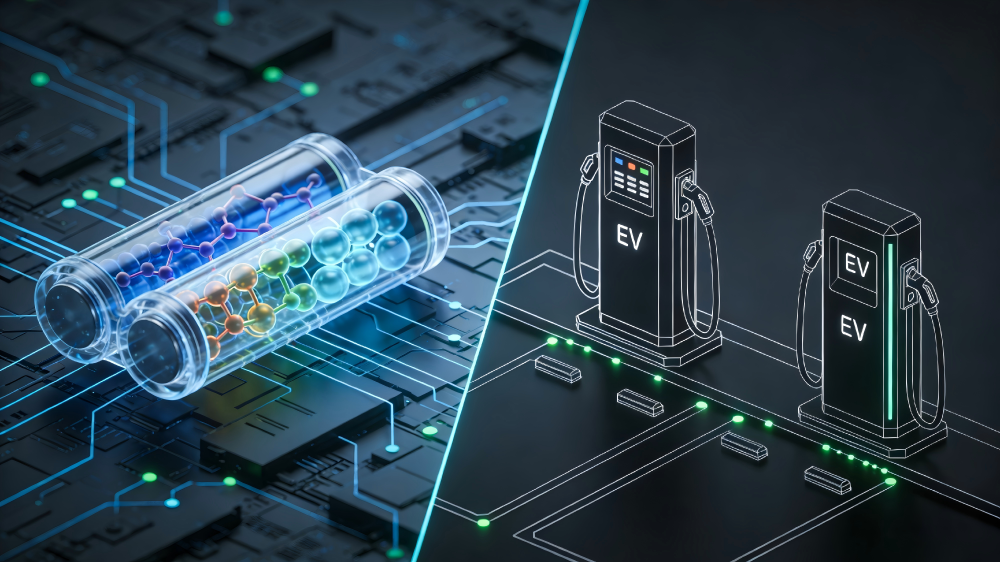
The rise of LFP low-temperature flash charging is reshaping the competitive landscape between mainstream battery chemistries — LFP, NMC, LMFP — and emerging systems like sodium-ion.
First, it challenges the historic dominance of NMC chemistry in ultra-fast charging applications. Previously, ultra-fast charging batteries almost exclusively used NMC chemistry to deliver high charge rates and long range. BYD’s breakthrough pushes LFP performance to new limits, breaking the traditional trade-off between fast charging, energy density, and cycle life, while retaining LFP’s inherent cost advantage.
Second, it is driving a material shift within the LFP family. Historically, LFP low-temperature improvements relied on manganese doping, and industry speculation suggests BYD’s second-gen Blade Battery uses a lithium manganese iron phosphate (LMFP) material system. LMFP’s most critical upgrade over traditional LFP is its low-temperature performance, delivering roughly 80% capacity retention at -20°C.
CATL has also brought its own material solutions to the table. CATL chairman Robin Zeng has previously noted that LMFP batteries outperform traditional LFP in cost reduction, energy density, and low-temperature performance in large-scale applications. As early as 2023, CATL’s LMFP-based M3P battery was deployed in multiple variants of the Zhijie S7, and has since been rolled out to models including the Zhijie R7, Xiangjie S9, and Exeed Yaoguang.
The company is also leveraging a multi-chemistry matrix, with sodium-ion as a core pillar of its cold-weather strategy. Last year, CATL launched multiple dual-chemistry battery packs, including an LFP + sodium-ion system that pairs lithium-based cells for long range with sodium-based cells for low-temperature resilience. Passenger vehicles equipped with its Naxin sodium-ion battery deliver nearly three times the discharge power at -30°C compared to conventional LFP models with the same energy, with over 90% capacity retention at -40°C and stable discharge even at -50°C. For commercial vehicles, its Tianxing Low-Temperature Edition sodium-ion battery — the first mass-produced sodium-ion cell for light commercial use — can be fully frozen at -30°C and still support plug-and-charge with no pre-conditioning.
Final Takeaways
Ultimately, the race for low-temperature battery performance is not defined by a single material breakthrough or isolated application upgrade. It is the product of end-to-end ecosystem building and deep, cross-disciplinary technological accumulation. As BYD, CATL, and Gotion continue to push the boundaries of cold-weather battery performance, they are not just solving a historic EV pain point — they are unlocking mass EV adoption in some of the world’s coldest, most underserved markets.
Welcome to contact us:
Inquiry more product details from the : Lithium Ion Battery Manufacturers
WhatsApp/Wechat/Mobile: +86 13332949210
Email: info@xihobattery.com
Website: www.xihobattery.com
Welcome to contact us:
Inquiry more product details from the : Lithium Ion Battery Manufacturers
WhatsApp/Wechat/Mobile: +86 13332949210
Email: info@xihobattery.com
Website: www.xihobattery.com
NiMH Rechargeable Batteries: Safety Essentials, Real-World Applications, and Critical Li-Ion Compari
Car Starting Voltage 101: Exact Volts Needed to Fire Up Your Vehicle
Leave a Reply
Your email address will not be published.Required fields are marked. *