By XH-Alan | 16 March 2026 | 40 Views
NiMH Rechargeable Batteries: Safety Essentials, Real-World Applications, and Critical Li-Ion Compari
For over three decades, Nickel-Metal Hydride (NiMH) rechargeable batteries have served as a reliable workhorse power solution for consumer electronics, industrial systems, and portable devices. Defined by consistent performance, inherent operational safety, and steady power delivery, NiMH technology retains enduring market relevance even as lithium-ion (Li-ion) batteries dominate modern high-performance device design. Leading manufacturers continue to refine NiMH chemistry to boost energy efficiency, cycle durability, and service life, making these cells a staple for applications requiring predictable, dependable runtime. This guide breaks down non-negotiable safety protocols, core real-world use cases, and critical technical differences between NiMH and Li-ion batteries, to inform both consumer purchasing decisions and industrial product design choices.
Core Chemistry & Technical Specifications of NiMH Batteries
A NiMH battery is a sealed rechargeable cell that uses a nickel oxide hydroxide positive electrode and a hydrogen-absorbing metal alloy negative electrode — a significant chemistry upgrade from legacy nickel-cadmium (NiCd) designs that delivers higher usable capacity and a drastically reduced environmental footprint. Key baseline specifications for standard NiMH cells include a 1.2V nominal voltage per cell, 60–120 Wh/kg gravimetric energy density, a service life of hundreds of charge-discharge cycles, and minimal toxic material content compared to NiCd alternatives. These well-rounded characteristics make NiMH cells a practical, cost-effective solution for a broad range of portable and stationary power applications.
NiMH Battery Safety: Inherent Risks and Evidence-Based Mitigation Practices
When handled and operated in strict alignment with manufacturer specifications, NiMH batteries are among the safest mainstream rechargeable chemistries available. They are non-toxic to humans, free of hazardous heavy metals like cadmium, and far less susceptible to thermal runaway than Li-ion alternatives. That said, all rechargeable batteries carry inherent risks if misused, with the primary hazard stemming from the cell’s alkaline electrolyte. Exposure to extreme heat, physical puncture or structural damage, or incorrect charging can trigger an electrolyte reaction that releases hydrogen gas — a colorless, odorless, and highly flammable substance that can accumulate in poorly ventilated, enclosed spaces. Adhering to strict usage, charging, and storage protocols eliminates nearly all associated safety risks.
Compliant Charging Protocols
Proper charging is the single most critical factor in preserving NiMH battery safety and maximizing service life. Only use chargers specifically engineered for NiMH chemistry, strictly follow manufacturer guidelines for charge current and maximum duration, avoid charging in extreme ambient temperatures (below 0°C or above 40°C), and prioritize smart chargers with integrated temperature sensing and automatic shutoff to prevent overcharging and thermal buildup.
Controlled Storage Requirements
Correct storage practices extend cell lifespan and prevent safety degradation over time. For long-term storage, remove NiMH cells from their host devices, house them in non-conductive protective packaging, store in a cool, dry environment with consistent temperatures between 10°C and 25°C, and prevent direct metal-to-metal contact between loose cells to avoid accidental short circuits.
Ventilation Mandates for Charging
NiMH cells may release trace amounts of hydrogen during the charging cycle, which can build up to hazardous levels in sealed, unventilated spaces. To mitigate risk, always charge NiMH batteries in well-ventilated areas, never charge in airtight or enclosed containers, and keep charging stations away from open flames, sparks, or other potential ignition sources.
Critical Universal Safety Guidelines
Keep all NiMH batteries and powered devices out of reach of young children, store loose cells in childproof, non-conductive containers, replace swollen, dented, or visibly damaged cells immediately, and seek emergency medical care without delay if a battery is ingested.
Core Industry & Consumer Applications of NiMH Technology
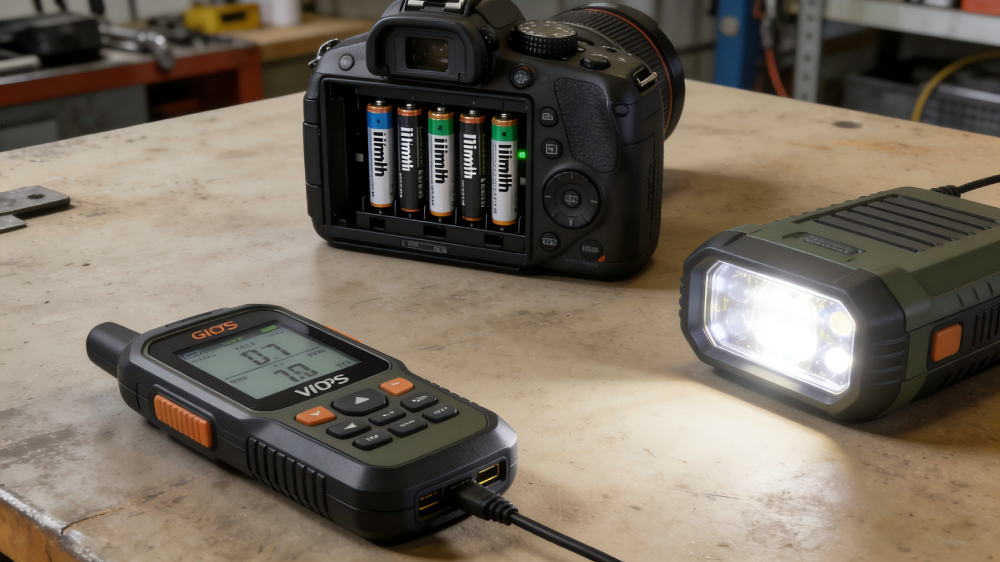
NiMH batteries have a proven, decades-long track record across a diverse range of applications, spanning consumer, industrial, and legacy tech sectors. Early generations of mobile phones and laptop computers relied on NiMH cells for their consistent performance and improved capacity over NiCd alternatives, laying the groundwork for modern portable computing. Today, NiMH cells remain the go-to solution for high-drain consumer devices including digital cameras, external flash units, professional photography accessories, handheld GPS units, portable audio players, and high-performance toys. They also see widespread use in industrial backup power systems, emergency lighting, and computer server backup units, where stable, long-duration power delivery is non-negotiable for operational continuity.
Head-to-Head Technical Comparison: NiMH vs. Li-Ion Batteries
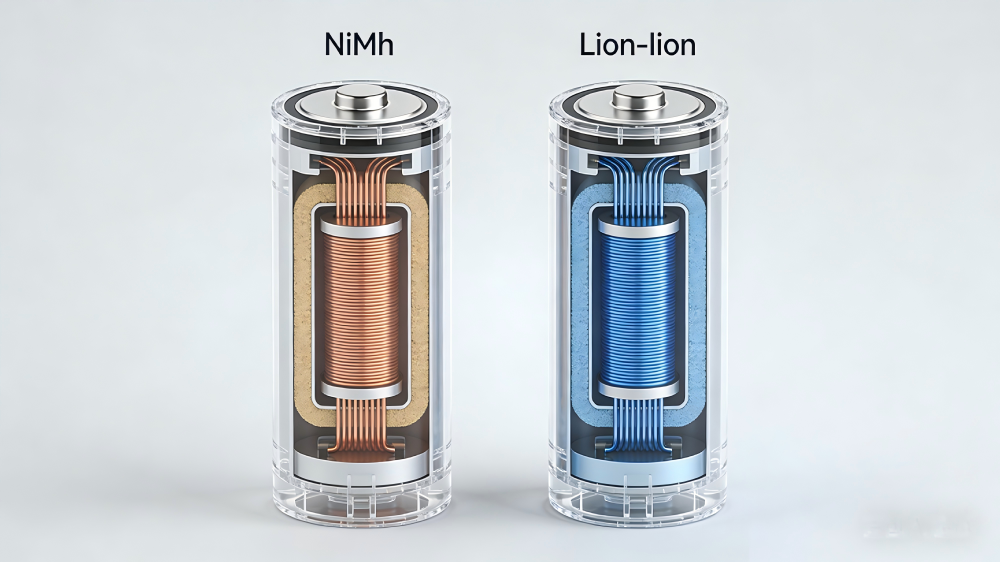
Understanding the core technical and performance differences between NiMH and Li-ion chemistries is critical for selecting the right power solution for any consumer or industrial application:
- Cycle Service Life: Li-ion batteries typically deliver a higher number of full charge-discharge cycles than NiMH equivalents, translating to a longer operational lifespan in most continuous-use modern electronics.
- Nominal Cell Voltage: Li-ion cells offer a 3.7V nominal voltage per cell, compared to 1.2V for NiMH cells. This higher per-cell voltage allows Li-ion designs to deliver equivalent power output with far fewer cells, simplifying device architecture and reducing overall pack size.
- Power & Energy Density: Li-ion batteries deliver superior peak power density and higher energy output thanks to their elevated operating voltage, while NiMH cells provide consistent, stable power delivery at lower voltage levels for steady-state applications.
- Charging Requirements: Each chemistry requires a dedicated charger matched to its unique charge profile; using an incorrect charger will cause irreversible cell damage and create severe safety hazards for both the battery and the end user.
- Form Factor & Weight: Li-ion batteries offer significantly higher energy density in a lighter, more compact footprint, making them ideal for slim, portable modern devices. NiMH cells are heavier and bulkier for equivalent usable capacity.
- Safety Profile: NiMH batteries have a far lower inherent risk of thermal runaway than Li-ion chemistries, which require dedicated integrated protection circuits to ensure safe operation in consumer and industrial devices.
- Total Cost of Ownership: NiMH cells have a lower upfront purchase cost for equivalent capacity, while Li-ion batteries carry a higher price tag due to their complex manufacturing processes and advanced material requirements.
Final Takeaways
NiMH rechargeable batteries remain a vital, highly relevant power technology in both consumer and industrial global markets. Their unique combination of inherent safety, consistent long-duration performance, reasonable energy density, and low environmental impact makes them ideal for a wide range of applications, from high-drain professional photography gear to mission-critical industrial backup power systems. Unlike legacy NiCd batteries, NiMH cells have minimal toxic material content, fully aligning with modern global environmental regulations and sustainability requirements. By adhering to manufacturer-recommended charging, storage, and safety protocols, end users can maximize the service life, performance, and safe operation of NiMH batteries for years to come.
Welcome to contact us:
Inquiry more product details from the : Lithium Ion Battery Manufacturers
WhatsApp/Wechat/Mobile: +86 13332949210
Email: info@xihobattery.com
Website: www.xihobattery.com
Welcome to contact us:
Inquiry more product details from the : Lithium Ion Battery Manufacturers
WhatsApp/Wechat/Mobile: +86 13332949210
Email: info@xihobattery.com
Website: www.xihobattery.com
Moonwatt Commissions Europe’s First NFPP Sodium-Ion Storage System, Unlocking Commercial Sodium Scal
Breaking the Cold Barrier: BYD, CATL and Gotion Redefine EV Battery Performance in Extreme Sub-Zero
Leave a Reply
Your email address will not be published.Required fields are marked. *