By XH-Alan | 31 March 2026 | 927 Views
3.7V Lithium-Ion Batteries: Lifespan Guide & Optimization Best Practices
3.7V lithium-ion (Li-ion) and lithium-polymer (Li-poly) cells are the global standard for portable electronics, powering smartphones, wearables, medical devices, drones, and handheld industrial tools. Their unrivaled mix of high energy density, stable voltage, and compact form factor makes them indispensable for low-voltage portable power. But how long do these batteries last, and how can you maximize their service life? This guide breaks down core chemistry, real-world lifespan, aging factors, and actionable maintenance best practices.
Core 3.7V Lithium Battery Specifications
A 3.7V lithium battery is a single rechargeable Li-ion/Li-poly cell with a 3.6–3.7V nominal voltage, ~4.2V full charge voltage, and 2.8–3.0V discharge cut-off (varies by integrated protection board). These cells deliver optimal energy density, safety, and space efficiency for compact applications. XIHO Battery designs custom 3.7V Li-ion, Li-poly, high-rate, and LiFePO4 solutions for wearables, medical devices, drones, and industrial electronics.
Common 3.7V Lithium Battery Chemistries
| Chemistry | Nominal Voltage | Rechargeable | Primary Use Cases |
|---|---|---|---|
| Li-ion | 3.6–3.7V | Yes | Laptops, flashlights, power banks |
| Li-poly | 3.7V | Yes | Drones, smart wearables, ultra-thin devices |
| LiFePO4 | 3.2V | Yes | Low-voltage energy storage, industrial sensors |
| Lithium-Metal | 3.0V | No | Disposable cameras, single-use remote sensors |
| The vast majority of rechargeable 3.7V cells on the market are Li-ion or Li-poly formulations. |
Real-World 3.7V Battery Lifespan Metrics
Standard commercial 3.7V Li-ion cells deliver 2–5 years of calendar life, 300–500 full charge cycles before capacity drops below 80% of its original rating, and up to 800–1000 cycles for premium cells under ideal conditions. Runtime varies entirely by cell capacity: 500mAh cells power Bluetooth earbuds for 2–3 hours, 2000mAh cells run flashlights for 5–10 hours, and 5000mAh cells support tablets for 10–20 hours.
Key Drivers of 3.7V Battery Aging
The top factors accelerating cell degradation are:
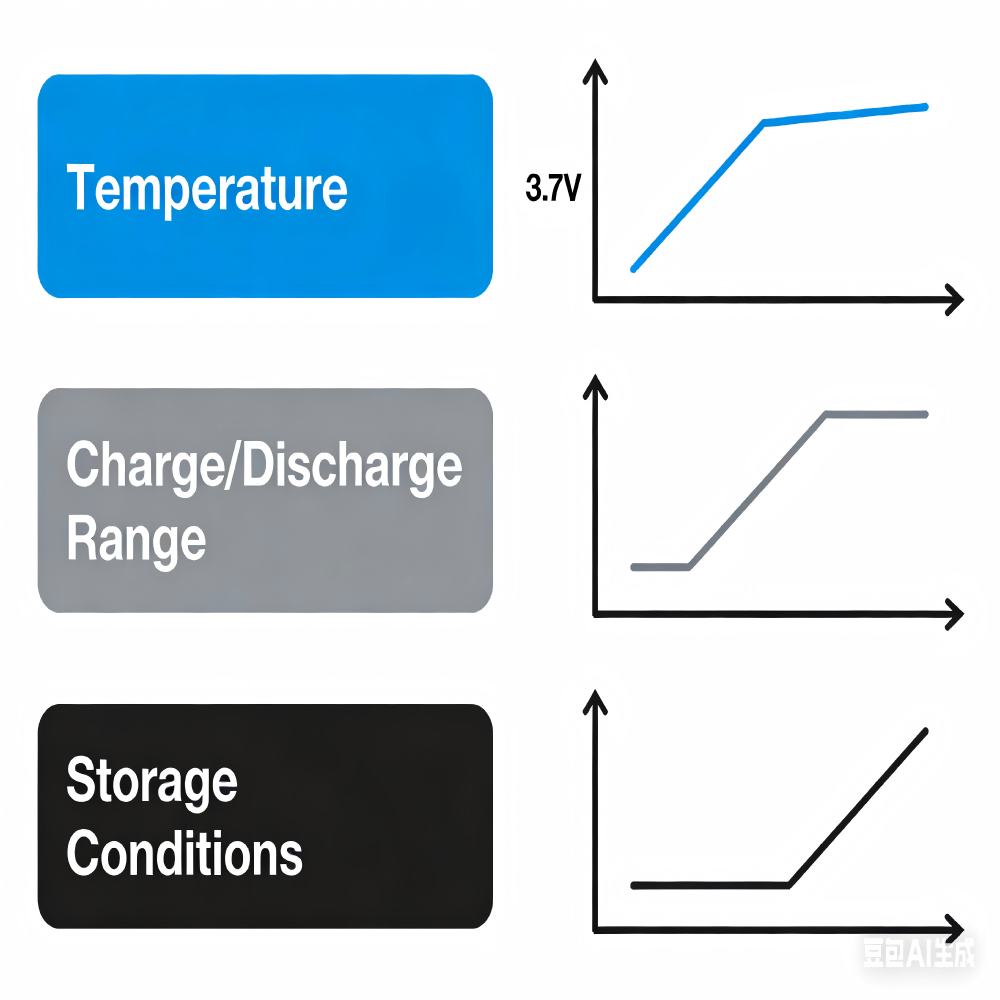
- Charge Cycles: Cumulative full 0%–100% discharge/recharge cycles drive internal chemical wear
- Temperature: Heat above 45°C is the single largest lifespan killer for lithium cells
- Depth of Discharge: Limiting routine use to the 20%–80% state of charge (SOC) doubles service life
- Storage Conditions: Optimal long-term storage requires 40%–60% SOC at 15–25°C
- Load Intensity: High-drain continuous use ages cells far faster than moderate, intermittent operation
Best Practices to Extend Battery Service Life
XIHO Battery’s engineering team recommends these steps to boost total lifespan by 30%–50%:
- Stick to the 20%–80% charging window whenever possible
- Avoid high temperatures during charging, operation, or storage
- Only use certified chargers matched to the cell’s voltage and current specifications
- Store long-term at ~50% SOC in a cool, dry environment
- Cycle stored batteries every 3–6 months to prevent deep discharge and capacity fade
Critical Warning Signs of a Degrading Battery
Replace cells immediately if you notice: noticeably reduced runtime, overheating during charge/discharge, casing swelling or bulging, unstable charging, or sudden voltage drops during use. Discontinue use of damaged cells at once to avoid safety risks.
Safe Disposal & Recycling Guidelines
Li-ion batteries must never be disposed of in general household trash. Safe end-of-life handling options include certified battery recycling drop-off points, professional hazardous waste collection programs, and manufacturer take-back services, to prevent fire hazards and environmental contamination.
Final Takeaways
3.7V Li-ion batteries are the reliable, energy-dense backbone of modern portable electronics. With proper care and maintenance, premium cells deliver 3–5 years of consistent service. XIHO Battery manufactures custom 3.7V lithium solutions, including Li-ion, Li-poly, LFP, and high-rate discharge cells, tailored to your device’s strict performance and safety requirements.
Li-ion vs Li-polymer Batteries: Full Comparison & 2026 Selection Guide
Critical Backup Lithium Batteries for Healthcare: 5S1P vs 7S1P Power Systems
Leave a Reply
Your email address will not be published.Required fields are marked. *