
1. Experimental Design
1.1 Test Samples and Equipment
The experiment used Samsung INR-18650-26H NCM lithium-ion cells with a nominal capacity of 2600mAh. The tests involved capacity characterization and cycling aging experiments under controlled temperature conditions using a charge/discharge testing system and a temperature-controlled environmental chamber.
1.2 Capacity Characterization Experiment
The battery was charged and discharged at different rates (0.2C, 0.5C, 1C, 2C, 3C) under 25°C conditions. Results showed that higher charging rates resulted in reduced charging capacity, and higher discharge rates reduced the usable capacity, especially at 4C, where capacity dropped to 68% of that at 0.2C.
1.3 Accelerated Aging Experiment
To simulate long-term use, batteries were cycled at 45°C to accelerate aging. Multiple charge/discharge conditions were tested, and standard capacity, incremental capacity, and GITT (Galvanostatic Intermittent Titration Technique) methods were used to monitor the aging process.
2. Results and Discussion
2.1 Impact of Charge Rate on Capacity
With increasing charge rates, the battery's charge capacity decreased. For example, at 1C charging, capacity decreased by 2%, and at 3C, it dropped by 6.3%. Higher charge rates result in faster voltage increases, reducing the charge capacity during the constant current phase.
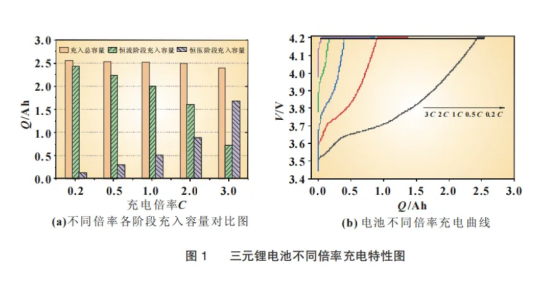
2.2 Impact of Discharge Rate on Capacity
Higher discharge rates led to reduced discharge capacity. At 4C, the discharge capacity was only 68% of that at 0.2C. This is due to faster lithium-ion movement, insufficient lithium-ion extraction, and reduced discharge capacity.
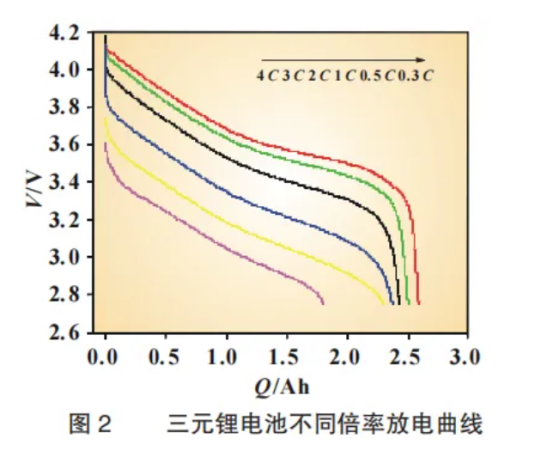
2.3 Cycling Impact on Capacity
After 100 cycles, capacity degradation was observed. Initially, discharge rate had a more significant impact on capacity loss, but after prolonged cycling, charge rate became more influential. Discharge rate mainly affected the negative electrode, while charge rate had a larger effect on the positive electrode.
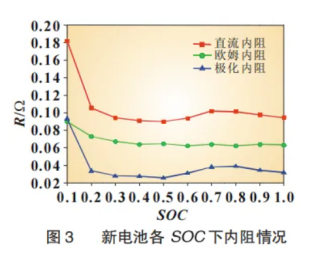
2.4 Internal Resistance Changes
As cycling progressed, internal resistance increased, especially polarization resistance, due to aging of the electrode materials and reduced lithium-ion diffusion rate.
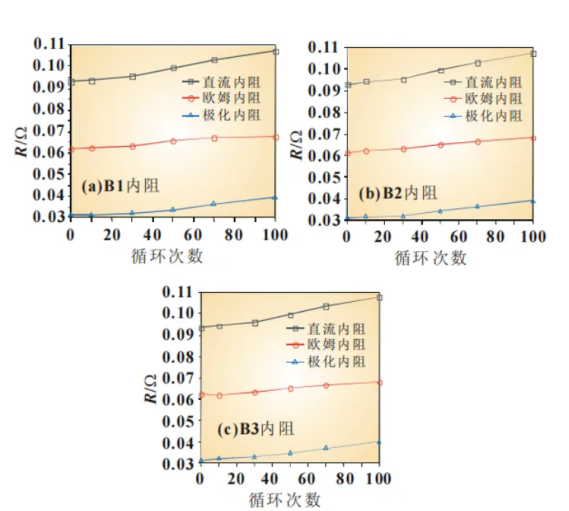
2.5 Incremental Capacity and Diffusion Coefficient Analysis
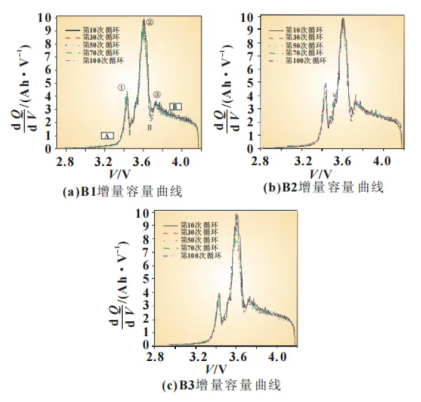
Incremental capacity curves showed that with cycling, the overall capacity shifted toward lower voltages, indicating increased impedance. Additionally, the chemical diffusion coefficient decreased over cycles, reflecting aging of the internal materials and declining lithium-ion extraction capability.
3. Conclusion
This study highlights the following key findings:
Impact of Charge/Discharge Rate on Capacity: Higher charge and discharge rates lead to a significant reduction in battery capacity. Specifically, at 4C discharge, capacity decreases by 32.4%, while at 1C charging, the reduction is about 2%.
Effect of Cycling on Battery Aging: In the early stages, discharge rate has a greater impact on capacity loss. However, after several cycles, the charging rate becomes more influential.
Aging Mechanisms: Capacity degradation is primarily caused by the loss of reversible lithium and the depletion of active materials, with aging leading to reduced lithium-ion diffusion and structural changes in the electrodes.
This research provides valuable insights into improving the performance and lifespan of NCM lithium-ion batteries, with potential applications in optimizing battery charging and discharging strategies.


