
| Item | Detail |
|---|---|
| Client | Joe Kesti |
| Location | Portugal |
| Product | Lishen 314Ah 3.2V LiFePO4 Battery Cell |
| Brand | Lishen |
| Application | Home Solar Energy Storage System |
| System Capacity | 16kWh (16 cells in 16S configuration) |
| Cell Grade | Brand New Grade A+ |
| Challenge | Communication protocol matching and system compatibility |
| Solution | RS485 communication module with professional debugging |
| Result | 100% successful, completed and delivered |
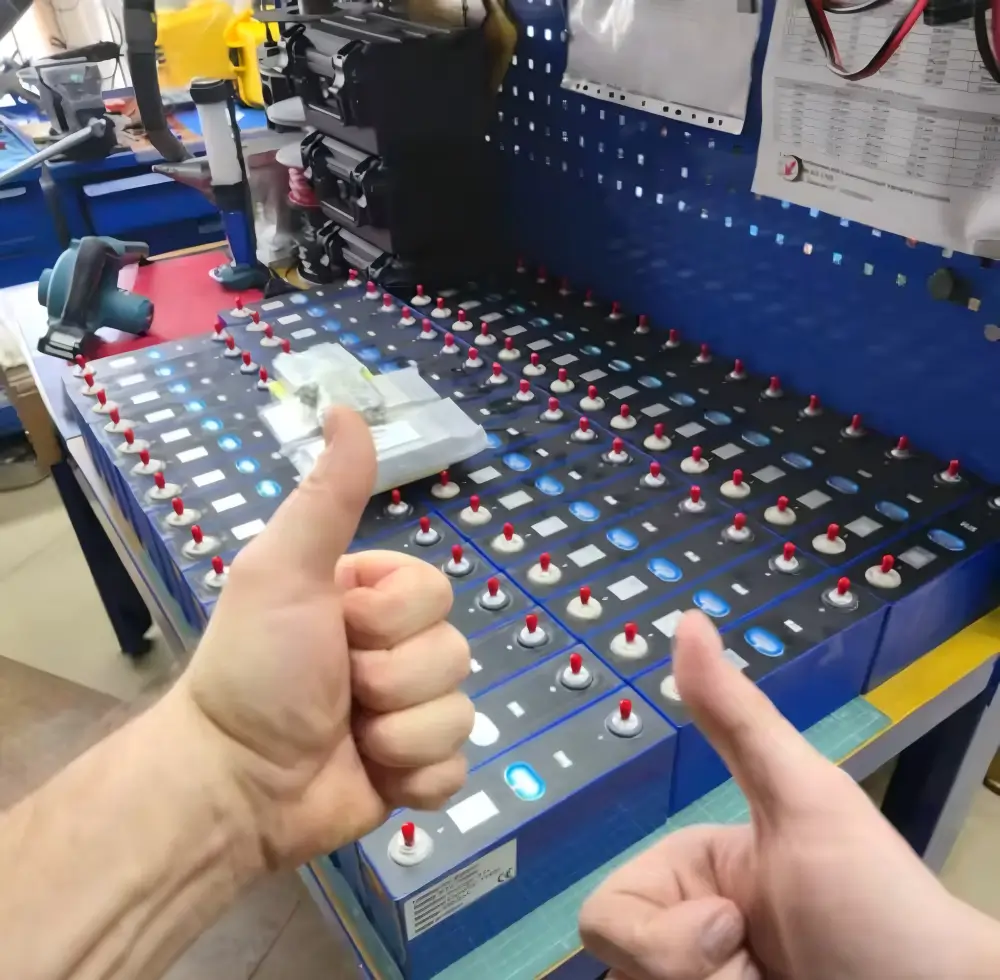
This residential solar storage project was built for Joe Kesti, a homeowner based in Portugal. The system uses 16 pieces of Lishen 314Ah 3.2V LiFePO4 battery cell wired in a standard 16S configuration to deliver a total of 16kWh usable storage capacity. The cells are 100% brand-new Grade A+ units, each tested for voltage, internal resistance, and capacity consistency before assembly.
Lishen is one of the more established LiFePO4 battery cell suppliers in the industry, and their 314Ah prismatic cells are widely used in residential and light commercial storage due to long cycle life, low self-discharge, and stable thermal performance. For this project, the cell group was matched within a tight voltage tolerance to ensure balanced charging and discharging over the system's lifespan.
The main issue our engineering team encountered was communication protocol compatibility between the battery pack, the inverter, and the solar charge controller. When protocols do not align, the system can experience incorrect state-of-charge readings, unstable charge and discharge behavior, or unexpected shutdowns. For a grid-tied residential system, these issues directly affect whether the homeowner can rely on stored solar energy during evening hours and power outages.
We resolved the compatibility issue by integrating a dedicated RS485 communication module into the battery management system. RS485 is a standard, widely supported protocol in the solar storage industry, and it allowed the BMS to transmit real-time voltage, current, temperature, and SOC data to the inverter and controller without data loss or lag.
Our team also performed on-site debugging to verify that every parameter—charge current limits, discharge cutoffs, temperature thresholds, and balancing settings—was correctly recognized by all three components. This step is often skipped in lower-cost installs, but it is what prevents problems from surfacing weeks or months after delivery.
The 16 Lishen 314Ah cells were mounted in a reinforced enclosure with proper insulation and fixed busbar connections. All wiring followed standard lithium iron phosphate safety practices, including insulated terminals, strain relief on power cables, and separate routing for high-current and communication wires.
After assembly, we ran a full test sequence:
Every cell performed within specification. Voltage across the 16 cell string stayed balanced, cell temperatures remained in the safe range, and the RS485 data feed was stable throughout testing.
The completed 16kWh battery pack was delivered to Joe Kesti in Portugal and fully met his daily household electricity demand. The system now stores solar energy generated during the day for use in the evening, reducing grid reliance and lowering monthly electricity costs.
This project also confirmed that the Lishen 314Ah 3.2V LiFePO4 battery cell is a solid choice for residential energy storage builds where cycle life, safety, and cost per kWh are the primary decision factors.
For homeowners and installers looking to build a reliable home solar energy storage system, cell quality and communication compatibility are the two factors that most often determine long-term success. Grade A+ matched cells prevent premature capacity loss, and a properly configured RS485 or CAN connection ensures the battery, inverter, and controller work as a single coordinated system.
If you are planning a custom solar battery solution for residential or small commercial use, we can source matched Grade A+ cells, configure the BMS and communication protocol for your specific inverter, and deliver a fully tested system ready for installation.
Ready to power your energy systems with the best in the industry?
Contact us today to get the latest pricing and discuss your needs with our team!
