By XH-Alan | 19 March 2026 | 560 Views
LiFePO4 Cell Form Factors for Solar Storage: Prismatic vs. Cylindrical – Which Is Right for Your Sys
Executive Summary
For most residential, commercial, and off-grid solar energy storage applications, prismatic lithium iron phosphate (LiFePO4) cells are the optimal choice. They deliver superior volumetric energy density, minimize system complexity with far fewer intercell connections (reducing critical failure risks), and maximize usable space in fixed battery enclosures. Cylindrical LiFePO4 cells, by contrast, outperform in specialized use cases requiring high peak discharge rates, extreme mechanical robustness, and inherent passive thermal management.
When designing or sourcing a LiFePO4 battery bank for solar energy storage, selecting the correct cell form factor is one of the most impactful engineering decisions. While both prismatic and cylindrical designs leverage the inherently safe, long-cycle-life LiFePO4 chemistry, their physical structures drive dramatic differences in real-world performance, integration ease, and long-term reliability in stationary solar setups.
1. Core Design & Attributes of Cylindrical LiFePO4 Cells
Cylindrical LiFePO4 cells, available in widely adopted industry form factors such as the 32650 and newer high-capacity 40135 variants, feature a tubular design analogous to oversized consumer alkaline cells. Their internal structure is created by tightly winding anode, cathode, and separator layers into a compact "jelly roll", which is then hermetically sealed inside a rigid, pressure-resistant metal casing.
Key Advantages of the Cylindrical Form Factor
- Inherent Thermal Management: The uniform, consistent gaps between densely packed cylindrical cells create natural airflow channels, enabling efficient passive or forced air cooling. This built-in ventilation significantly mitigates thermal runaway risks, a core safety benefit for high-cycle applications.
- Superior Mechanical Stability: The cylindrical geometry evenly distributes internal pressure across the cell casing, delivering exceptional resistance to swelling, bulging, and structural deformation even after thousands of deep charge-discharge cycles.
- High Discharge Rate Capability: Their optimized internal structure supports very high continuous and peak discharge rates, making them ideally suited for applications with sudden, high-power demands such as electric vehicles, industrial power tools, and high-load pulse systems.
2. Core Design & Attributes of Prismatic LiFePO4 Cells
Prismatic LiFePO4 cells are large-format, rectangular units housed in rigid aluminum alloy or high-impact industrial plastic enclosures. Unlike the wound jelly roll of cylindrical cells, prismatic cells use either flat stacked electrode layers or a flattened wound structure to maximize usable internal volume. These cells are available in a broad range of capacities, from 50Ah up to industry-leading 280Ah and 304Ah high-density variants, which have become the standard for large-scale stationary energy storage.
Key Advantages of the Prismatic Form Factor
- Unmatched Space Efficiency: The rectangular, stackable design eliminates the wasted interstitial voids inherent to cylindrical cell packs, enabling near-100% utilization of enclosure volume and maximum volumetric energy density in fixed installations.
- Simplified System Integration: For example, a 12V 100Ah battery assembly requires only four 100Ah prismatic cells wired in series. An equivalent pack using cylindrical cells would require dozens of individual units connected via precision spot welding, drastically increasing assembly complexity and labor requirements.
- Optimized Weight-to-Energy Ratio: Prismatic cells typically have a far lower packaging-to-active-material ratio, resulting in a lighter overall pack weight for the same usable energy capacity compared to cylindrical cell alternatives.
3. Head-to-Head Performance Comparison for Solar Storage
The table below breaks down critical performance metrics for prismatic and cylindrical LiFePO4 cells, specifically tailored to the demands of stationary solar energy storage applications:
| Critical Performance Metric | Prismatic LiFePO4 Cells | Cylindrical LiFePO4 Cells |
|---|---|---|
| Volumetric Space Utilization | Superior (zero wasted gap space between stacked cells) | Moderate (unusable voids between tubular cell arrays) |
| System Integration Complexity | Low (simple, tool-assisted bolted busbar connections) | High (requires extensive precision spot welding and custom fixturing) |
| Single-Point Failure Vulnerability | Very Low (minimal intercell connections) | Elevated (hundreds of individual welds and connection points) |
| Thermal Management Requirements | Requires active BMS thermal monitoring and targeted cooling design | Excellent inherent passive cooling via built-in intercell airflow channels |
| Long-Term Swelling Resistance | Moderate (requires structural compression hardware to mitigate cycle-induced swelling) | Exceptional (cylindrical geometry inherently resists internal pressure buildup) |
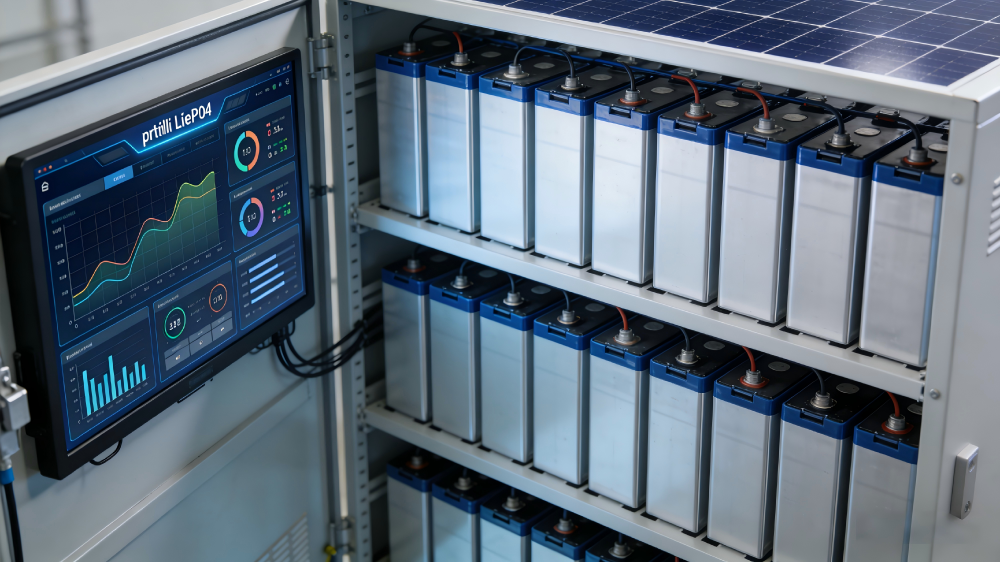
Residential, commercial, and off-grid solar storage systems operate with fundamentally different load profiles than high-power applications like electric vehicles. The vast majority of solar storage setups deliver steady, predictable discharge rates over extended periods, with minimal sudden peak power demands. For this core use case, the high-discharge capability and advanced passive thermal performance of cylindrical cells are rarely necessary, and often represent an unnecessary cost and complexity premium.Instead, solar installers, DIY system builders, and commercial integrators prioritize two non-negotiable factors: maximum energy density in a fixed footprint, and long-term system reliability through simplified, low-failure design. Prismatic cells excel on both fronts. For example, a standard 48V server rack battery – the workhorse of modern residential and light commercial solar storage – can be built with just 16 high-capacity prismatic cells connected via heavy-duty busbars. This streamlined design minimizes internal resistance, simplifies Battery Management System (BMS) wiring and integration, and drastically reduces the risk of system failure from a faulty weld or loose connection – a common and costly pain point with large-scale cylindrical cell packs.
5. Final Guidance for Your Solar Battery BuildRegardless
Regardless of which cell form factor you select for your solar storage system, the single most critical factor for long-term performance, safety, and lifespan is sourcing high-quality, Grade A cells from reputable, ISO-certified manufacturers. Grade A cells deliver consistent capacity, cycle life, and thermal stability, which is non-negotiable for stationary storage systems expected to operate reliably for 10+ years.For the vast majority of solar storage applications – from residential grid-tied backup to off-grid cabin and RV power systems – prismatic LiFePO4 cells offer the best balance of energy density, ease of installation, long-term reliability, and total cost of ownership. Cylindrical cells remain a specialized, high-performance solution for systems with extreme high-discharge requirements, or installations that demand maximum mechanical durability in harsh, vibration-heavy operating environments.
Welcome to contact us:
Inquiry more product details from the : Lithium Ion Battery Manufacturers
WhatsApp/Wechat/Mobile: +86 13332949210
Email: info@xihobattery.com
Website: www.xihobattery.com
EVE Energy Debuts Groundbreaking All-Solid-State Battery Lineup, Overcoming a Key Bottleneck for Wid
Sunwoda Powers Next-Gen AI Data Centers With Full-Stack Energy Resilience via 800V Architecture
Leave a Reply
Your email address will not be published.Required fields are marked. *