By XH-Alan | 31 March 2026 | 567 Views
LiFePO4 Batteries for Solar Energy Storage: Complete 2026 Performance Guide
For residential and commercial solar system owners across North America and Europe, selecting the right energy storage solution is the difference between true energy independence, grid resilience, and wasted renewable generation. Lithium Iron Phosphate (LiFePO4, or LFP) batteries have emerged as the global gold standard for solar storage, outperforming legacy lead-acid and alternative lithium chemistries across efficiency, safety, and total cost of ownership. This guide breaks down everything you need to know about LiFePO4 for solar storage, from core chemistry to real-world performance, to make an informed investment.
Core Fundamentals of LiFePO4 Solar Batteries
A LiFePO4 battery is a rechargeable lithium-ion variant that uses lithium iron phosphate as its cathode material, paired with a graphite anode and a stable liquid electrolyte. This unique chemical formulation delivers inherent stability, safety, and longevity that sets it apart from other battery types for stationary solar storage. Think of your solar array as a renewable energy harvester: panels generate electricity during daylight hours, but without a reliable storage reservoir, excess generation is either lost or sent back to the grid at minimal compensation. LiFePO4 batteries act as that robust, long-lasting reservoir, storing solar energy for use during evenings, grid outages, or peak rate periods.
How LiFePO4 Chemistry Delivers Superior Solar Performance
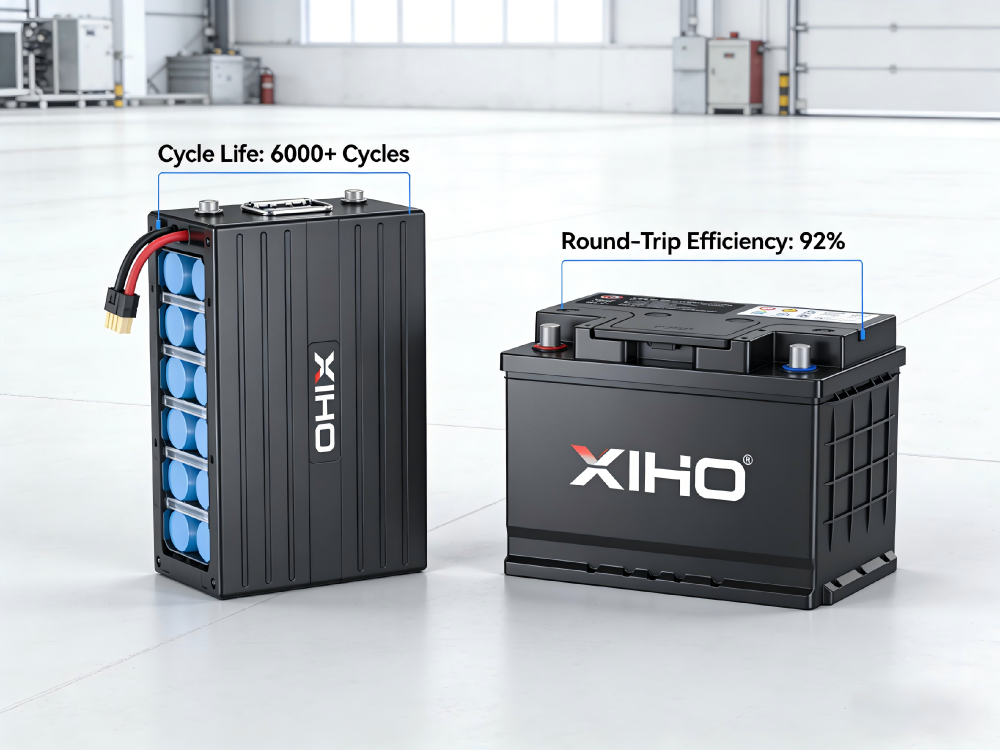
At its core, a LiFePO4 battery operates via the reversible movement of lithium ions between the anode and cathode during charge and discharge cycles. When solar panels generate DC power, lithium ions migrate from the cathode to the anode, storing energy. When power is drawn from the battery, ions flow back to the cathode, releasing stored energy with minimal loss. What makes LFP unique is the exceptional stability of its iron phosphate cathode, which creates a consistent, low-friction pathway for ion movement, drastically reducing long-term degradation. Unlike other chemistries that suffer voltage sag as they discharge, LiFePO4 batteries maintain a steady output through 90% of their discharge cycle, ensuring consistent performance for household appliances, commercial equipment, and sensitive electronics. With a round-trip efficiency of 90–95%, LFP batteries lose just 5% of stored energy, compared to 20–30% losses with legacy lead-acid batteries.
Key Advantages for Solar Energy Storage
Unmatched Longevity & Durability
LiFePO4 batteries deliver 4,000–6,000 full charge-discharge cycles, retaining 80% of their original capacity at the end of this lifespan, translating to 10–15 years of reliable daily use in solar setups. This is a 10x improvement over flooded lead-acid batteries, which typically last just 300–500 cycles and require replacement every 2–3 years. LFP’s robust chemistry also handles deep discharge up to 80–90% of rated capacity without permanent damage, compared to lead-acid batteries which are limited to 50% depth of discharge to preserve lifespan.
Inherent Safety & Low Maintenance
LiFePO4’s iron phosphate cathode delivers exceptional thermal and chemical stability, drastically reducing the risk of thermal runaway, fire, or swelling, even in the event of physical damage or overcharging. All premium LFP batteries include an integrated Battery Management System (BMS), which continuously monitors cell voltage, temperature, state of charge, and health, providing overcharge, over-discharge, and short-circuit protection. Unlike lead-acid batteries, which require quarterly watering, terminal cleaning, and equalization charges, LFP batteries are virtually maintenance-free, requiring only annual visual inspections.
Head-to-Head: LFP vs Legacy Solar Storage Chemistries
| Core Feature | LiFePO4 Battery | Flooded Lead-Acid Battery |
|---|---|---|
| Rated Cycle Life | 4,000–6,000 cycles | 300–500 cycles |
| Round-Trip Efficiency | 90–95% | 70–80% |
| Max Depth of Discharge | 80–90% | 50% |
| Maintenance Requirements | Minimal (annual inspection) | High (quarterly service) |
| Relative Weight | Lightweight (1/3 of lead-acid) | Heavy, bulky |
Compared to other lithium-ion chemistries (like NMC or LCO), LiFePO4 sacrifices marginal energy density for vastly improved safety, longer cycle life, and lower long-term cost, making it the ideal choice for stationary solar storage where reliability and longevity outweigh compact form factor.
Cost Analysis & ROI
While LiFePO4 batteries have a higher upfront purchase cost than lead-acid alternatives, their 10x longer lifespan, minimal maintenance, and higher efficiency deliver a significantly lower total cost of ownership. When calculated on a cost-per-cycle basis, LFP batteries are often 50–70% cheaper than lead-acid, with most solar system owners seeing full ROI within 3–5 years, followed by a decade of virtually free energy storage.
Ideal Applications
LiFePO4 batteries are the optimal solution for residential grid-tied solar with backup, off-grid homes and cabins, commercial and agricultural solar storage, RV and marine solar systems, and utility-scale renewable energy storage projects.
Final Takeaways
LiFePO4 batteries have redefined solar energy storage, delivering an unmatched combination of efficiency, safety, longevity, and low maintenance that legacy chemistries cannot match. For residential and commercial solar owners across North America and Europe, LFP is the most reliable, cost-effective storage solution to maximize renewable energy usage, achieve grid independence, and protect against power outages. XIHO Battery designs and manufactures premium, safety-certified LiFePO4 battery systems tailored for residential and commercial solar energy storage, delivering industry-leading performance and reliability for European and North American customers.
Welcome to contact us:
Inquiry more product details from the : Lithium Ion Battery Manufacturers
WhatsApp/Wechat/Mobile: +86 13332949210
Email: info@xihobattery.com
Website: www.xihobattery.com
Welcome to contact us:
Inquiry more product details from the : Lithium Ion Battery Manufacturers
WhatsApp/Wechat/Mobile: +86 13332949210
Email: info@xihobattery.com
Website: www.xihobattery.com
2026 Tianjin E-Mobility Expo: CORNEX Debuts Breakthrough LFP & Sodium-Ion Battery Tech
Li-ion vs Li-polymer Batteries: Full Comparison & 2026 Selection Guide
Leave a Reply
Your email address will not be published.Required fields are marked. *