Solar Cell Manufacturing: The Engine of the Global Clean Energy Transition
In the global shift toward carbon neutrality, solar energy stands out as one of the cleanest and most abundant renewable resources. At the heart of this transformation is the solar cell—the essential component that converts sunlight into usable electricity. Solar cell manufacturing facilities represent far more than production sites; they are hubs of advanced technology and critical enablers of worldwide energy transformation.
Strategic Role of Solar Cell Production Facilities
A modern solar cell factory is a highly integrated operation combining advanced technology, significant capital investment, and specialized talent.
• Enabling Energy Independence: By producing efficient and affordable solar cells at scale, these plants make energy self-sufficiency achievable for households, businesses, and nations.
• Central Link in the PV Value Chain: Positioned midstream in the photovoltaic industry, these facilities connect upstream material suppliers with downstream module and system integrators. Their technical capabilities and production scale directly shape the sector's competitiveness.
• Drivers of Innovation: These factories serve as the bridge between laboratory research and commercial deployment, accelerating technological progress and cost reduction across the industry.
Key Manufacturing Processes: From Wafer to Cell
Inside a state-of-the-art solar cell plant, a highly automated and precise manufacturing process unfolds:
-
Texturing & Cleaning
Chemical etching creates microscopic pyramids on the silicon wafer surface, enhancing light absorption and reducing reflection to improve cell efficiency. -
Diffusion
Introduction of phosphorus atoms into P-type silicon forms the P-N junction—the core structure where sunlight is converted into electrical energy. -
Edge Isolation
Removal of conductive layers along the wafer edges prevents electrical short circuits, ensuring optimal current collection. -
Anti-Reflection Coating
A silicon nitride layer deposited via PECVD minimizes light reflection and passivates the wafer surface to enhance charge carrier collection. -
Screen Printing & Firing
Metallic grids are printed onto the cell surfaces and fired at high temperature to form electrodes that efficiently extract electrical current. -
Testing & Sorting
Each cell is evaluated under standardized light conditions and grouped by performance to ensure consistency and quality in final solar panels.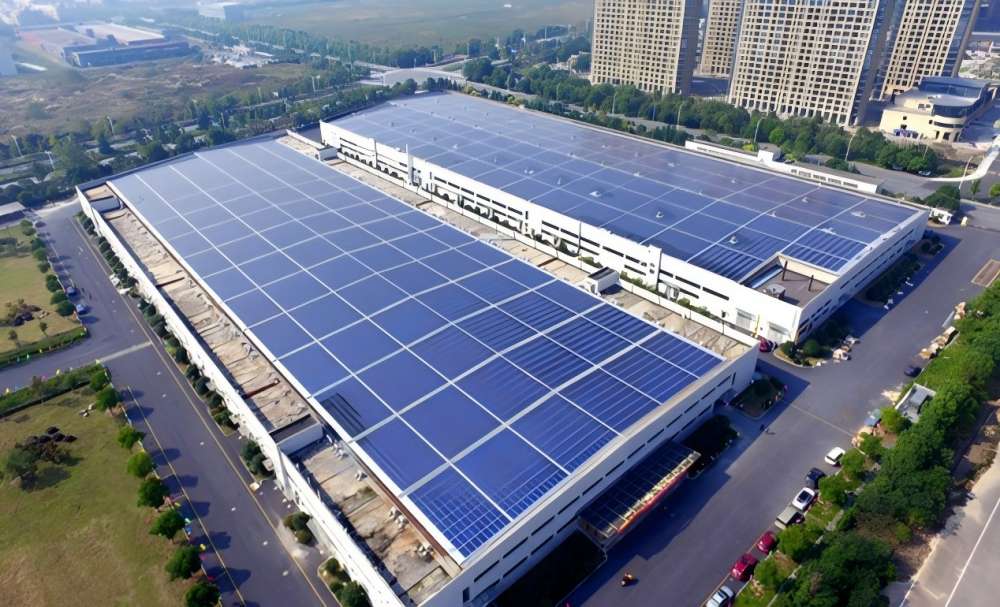
Core Competitiveness of Modern Production Facilities
• Efficiency and Cost Optimization
While PERC technology remains widespread, advanced architectures like TOPCon, HJT, and IBC are becoming the new standard—delivering higher conversion efficiency and improved longevity. Cost reduction is achieved through economies of scale, material savings, higher yields, and intelligent automation.
• Automation and Smart Manufacturing
Automated Guided Vehicles (AGVs), machine vision systems, and Manufacturing Execution Systems (MES) enable precise, traceable, and efficient production—paving the way for fully automated "lights-out" factories.
• Sustainable Operations
Leading facilities emphasize green manufacturing through energy-efficient equipment, comprehensive treatment of wastewater and emissions, and recycling initiatives for silicon and other materials.
Future Outlook: Next-Generation Solar Factories
• Technology Convergence: Hybrid architectures combining XBC, HJT, and TOPCon are set to push cell efficiencies even higher.• Perovskite-Silicon Tandems: These promising structures may soon enter mass production, breaking the efficiency limits of conventional silicon cells.
• AI and Digitalization: Artificial intelligence and big data will further optimize process control, predictive maintenance, and quality assurance.
• Localized Supply Chains: To enhance resilience and meet regional requirements, more geographically distributed production bases are expected to emerge worldwide.
Solar cell manufacturing plants are evolving rapidly in scale and sophistication. More than just production centers, they are foundational to a sustainable energy future. As technology advances and manufacturing capabilities grow, these facilities will continue to improve the efficiency and affordability of solar power—accelerating the global transition to clean energy.
Inquiry more product details from the : Lithium Ion Battery Manufacturers
WhatsApp/Wechat/Mobile: +86 13332949210
Email: info@xihobattery.com
Website: www.xihobattery.com